
Marine Gas Oil
Marine gas oil is the distillate fuel of shipping. It powers vessels inside emission control areas, auxiliary engines, and the tugs, ferries and fishing boats that never burn heavy fuel.
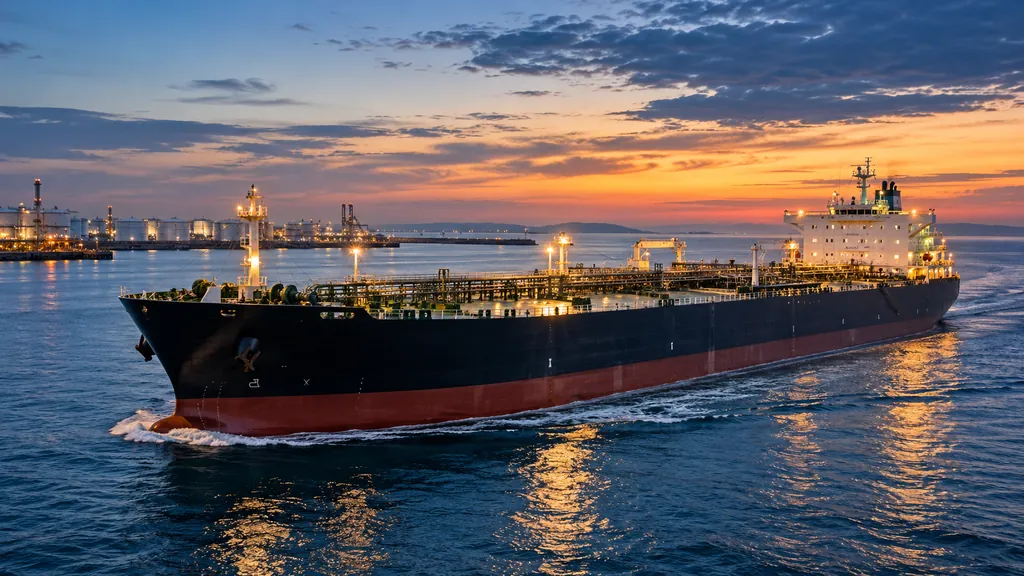
The clean fuel at sea
Ships must burn fuel with no more than 0.10% sulfur inside emission control areas such as the Baltic, the North Sea and North American coastal waters. Marine gas oil at that limit is the simplest way to comply.
Unlike residual fuel it needs no heating and little treatment on board. That convenience carries a higher price, so most large ships use it only where the rules require.
- Product type
- Distillate marine fuel
- Governing standards
- ISO 8217, grades DMA and DMZ
- Sold by
- The metric ton
- Typical buyers
- Marine fuel suppliers, ship operators and port service fleets
- Carried in
- Product tankers and bunker barges
What ISO 8217 requires
| Property | Reference | Why it matters |
|---|---|---|
| Sulfur | 0.10% maximum in emission control areas; 0.50% elsewhere | Fixed by maritime air-quality rules. |
| Viscosity at 40 °C | 2.0 to 6.0 mm²/s (DMA) | Fuel pumps and injectors need a minimum viscosity to stay lubricated. |
| Density at 15 °C | 890 kg/m³ maximum (DMA) | Converts volume to weight and indicates energy content. |
| Flash point | 60 °C minimum | The safety limit for fuel carried on ships. Road diesel may flash lower. |
| Cetane index | 40 minimum (DMA) | Measures how readily the fuel ignites. Higher values give smoother combustion. |
| Pour point | −6 °C in winter, 0 °C in summer, maximum (DMA) | The fuel must stay liquid in unheated tanks. |
Limits are those published in the named standards, given for reference. The specification written into the sales contract governs.
Grades a buyer may ask for
Low-sulfur marine gas oil
Sulfur of 0.10% or less, for emission control areas.
DMA and DMZ
Clear distillate grades in ISO 8217. DMZ has a higher minimum viscosity.
DMB
A distillate grade that may contain traces of residual fuel.
Storage and shipping
- Delivery. Ships take marine gas oil from a barge or truck alongside. Cargo lots reach the supplying terminal by product tanker.
- Documents. Each delivery carries a bunker delivery note stating quantity, density and sulfur.
- Samples. Sealed samples are drawn during delivery and kept by supplier and ship.
Storage and transport are provided by third-party terminal operators and carriers. We coordinate them. How storage and shipping are arranged

What to send with your enquiry
- Grade and sulfur limit
- Cargo supply to a terminal, or delivery to a named vessel
- Quantity in tonnes and how often you need it
- Port and preferred Incoterm
- Delivery window
Send these details and we will tell you whether we can source the product and on what terms. Price, quantity and specification are fixed in the sales contract.